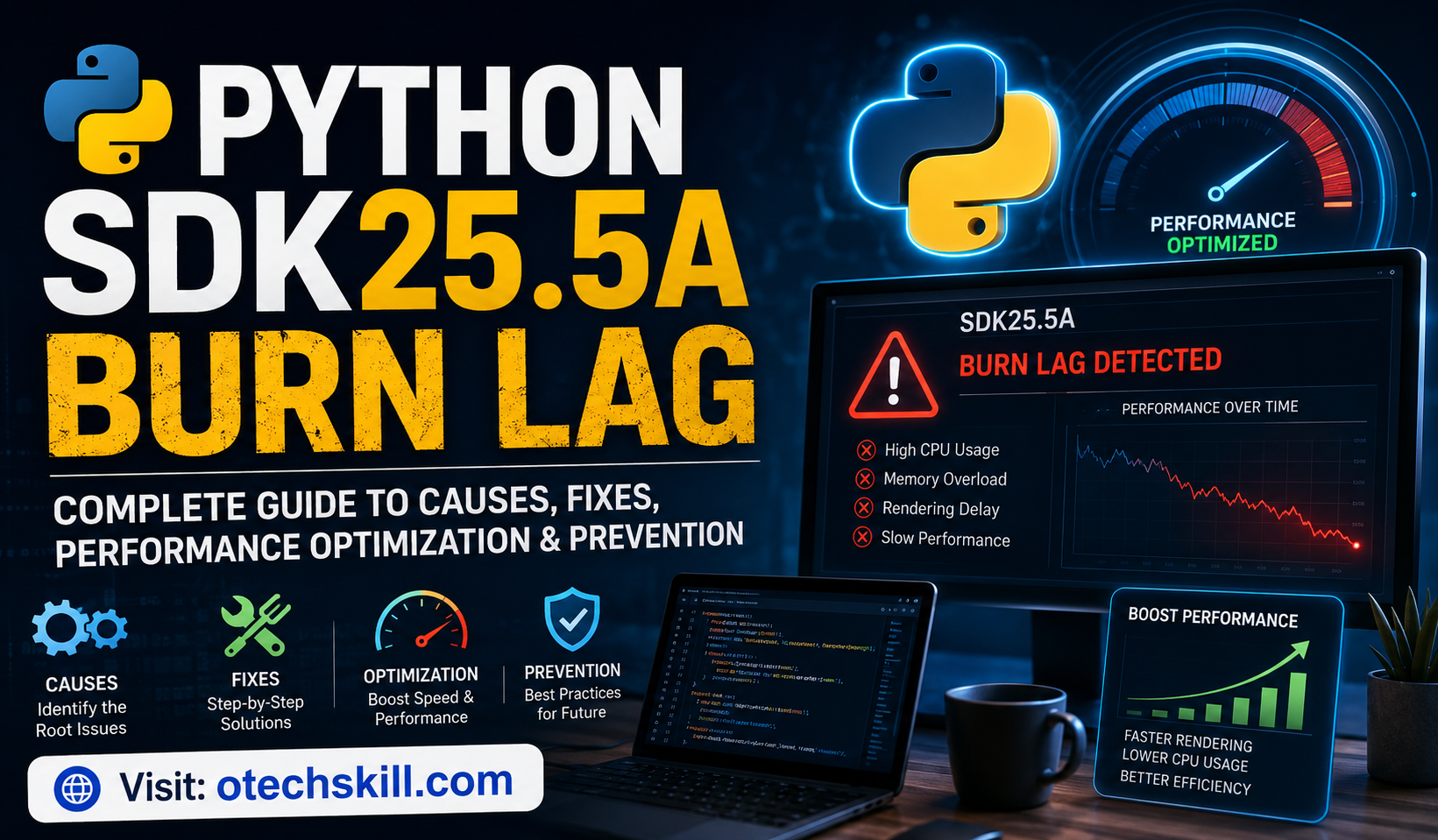
Python SDK25.5A Burn Lag has become a common concern for developers who work on AI applications, automation tools, and high-performance software. When this issue appears, projects may experience slower execution, delayed rendering, and increased resource consumption. Understanding the root cause helps you resolve problems before they affect productivity or user experience.
This guide explains how to identify Python SDK performance issues, apply effective Python SDK25.5A lag fix strategies, and improve overall SDK25.5A optimization. You will also learn how proper Python SDK resource management and regular Python SDK update practices can boost performance, reduce lag, and keep your applications running smoothly throughout 2026.
What Is Python SDK25.5A Burn Lag?
Python SDK25.5A Burn Lag describes a condition where applications become noticeably slower during processing, compiling, rendering, or executing resource-intensive tasks. Instead of completing operations smoothly, the software experiences delays because system resources cannot keep up with the workload. This often appears while handling AI models, video processing, automation scripts, or image rendering. Many developers first notice Python SDK slow performance when projects suddenly consume excessive memory or processor power. Good SDK configuration and proper Python SDK workflow help minimize these delays before they become serious problems.
The issue does not always mean the SDK contains a bug. In many situations, poor coding practices, outdated libraries, overloaded hardware, or inefficient Resource allocation create unnecessary bottlenecks. A successful Burn lag solution usually combines Python SDK troubleshooting, better Python SDK settings, and smart SDK performance optimization. Developers who regularly update to the latest SDK version, clear temporary cache, practice software resource management, and optimize SDK settings often notice immediate improvements in overall responsiveness.
| Factor | Effect on Performance |
|---|---|
| CPU Overload | Slower processing speed |
| Memory Exhaustion | Frequent freezing and delays |
| Large Cache Files | Longer loading time |
| Poor SDK Configuration | Reduced efficiency |
| Outdated Dependencies | Compatibility and performance issues |
| Heavy Rendering Tasks | Increased processing latency |
Why Does Python SDK25.5A Burn Lag Occur?

Several factors contribute to Python SDK25.5A Burn Lag, and they often appear together rather than individually. Large datasets, inefficient algorithms, outdated dependencies, poor Python SDK cache handling, and excessive SDK memory usage create pressure on system resources. As workloads increase, developers may experience SDK rendering lag, Video rendering lag, Image generation lag, or reduced AI rendering performance. Modern software performs thousands of operations every second, so even minor inefficiencies can gradually create serious performance bottlenecks.
Hardware also plays an important role. Older processors, limited RAM, and weak graphics hardware struggle to support demanding SDK features. Without proper GPU optimization, Rendering performance drops during intensive workloads. Likewise, excessive background applications increase High CPU usage Python projects must compete with, making execution slower. Developers can often reduce burn lag, improve rendering speed, optimize memory allocation, reduce GPU load, lower CPU usage, and achieve performance enhancement through proper hardware acceleration, background process optimization, and regular system resource monitoring.
Developer Insight: Most burn lag problems result from several small inefficiencies working together rather than one major software defect.
Common Signs That Your Project Is Suffering from Burn Lag
Recognizing burn lag early makes optimization much easier. Projects affected by Python SDK25.5A Burn Lag usually show longer startup times, delayed execution, slower builds, unexpected freezing, and inconsistent rendering performance. Developers frequently notice higher SDK memory usage, reduced Processing speed improvement, unstable Python SDK workflow, and delayed responses after software updates. Ignoring these warning signs often allows the problem to grow until development becomes frustrating and deployment slows considerably.
Performance monitoring tools can reveal hidden resource consumption before users notice slowdowns. High processor usage, increasing cache size, memory leaks, and excessive disk activity often indicate the need for Python SDK update, SDK25.5A optimization, or improved Python SDK resource management. Simple maintenance tasks such as temporary files cleanup, cache management, project optimization, workload balancing, and efficient rendering help create stable SDK performance. These practices also support faster rendering, faster image generation, faster video generation, frame rendering optimization, rendering engine improvements, rendering optimization techniques, software optimization methods, optimize project files, and reduce processing delays over the long term.
| Common Symptom | Possible Cause | Recommended First Step |
|---|---|---|
| Slow application startup | Large cache files | Clear temporary cache |
| High CPU usage | Poor code efficiency | Lower CPU usage through optimization |
| Memory spikes | Resource leaks | Optimize memory allocation |
| Slow rendering | Weak GPU performance | Apply GPU optimization |
| Random freezing | Heavy background processes | Perform Background process optimization |
| Long build times | Dependency conflicts | Update to the latest SDK version |
| Delayed AI tasks | Resource overload | Improve Software resource management |
| Inconsistent execution | Poor SDK settings | Optimize SDK settings for better stability |
Step-by-Step Methods to Fix Python SDK25.5A Burn Lag

Fixing Python SDK25.5A Burn Lag starts with finding the real source of the slowdown instead of guessing. Begin by checking your project dependencies, SDK version, and system resources. Install the latest stable release because a recent Python SDK update often includes important bug fixes and performance improvements. Next, remove unused packages, rebuild your virtual environment, and verify that every library is compatible with the current SDK. These simple actions solve many Python SDK performance issues before deeper troubleshooting becomes necessary.
After updating the project, focus on system efficiency. Regularly clear temporary cache, remove unnecessary build files, and improve Python SDK cache handling to prevent wasted storage. Continue by optimize SDK settings, optimize memory allocation, and perform background process optimization to free valuable resources. Effective cache management, temporary files cleanup, software resource management, and proper Resource allocation work together to reduce burn lag, improve system performance, and deliver a smoother development experience.
| Solution | Expected Result | Difficulty |
|---|---|---|
| Update SDK | Better compatibility and speed | Easy |
| Clear cache | Faster loading times | Easy |
| Remove unused packages | Lower memory usage | Easy |
| Optimize project files | Smaller build size | Medium |
| Improve SDK settings | Better execution speed | Medium |
| Monitor resource usage | Easier troubleshooting | Medium |
| Upgrade hardware | Higher overall performance | Advanced |
Advanced Performance Optimization Techniques
Once the basic fixes are complete, advanced optimization can unlock even better results. Developers should review algorithms, reduce repeated calculations, and choose efficient data structures. Modern profiling tools help identify hidden performance bottlenecks that increase execution time. Better Python software optimization also includes improving database queries, minimizing unnecessary file operations, and using asynchronous programming where suitable. These improvements strengthen SDK performance optimization without changing the application’s core functionality.
Rendering-heavy applications benefit from additional tuning. Enable hardware acceleration whenever supported and apply GPU optimization to improve Rendering performance during demanding workloads. Projects involving AI graphics, animation, or media processing should focus on frame rendering optimization, rendering engine improvements, and rendering optimization techniques. These strategies help create a smooth rendering workflow, deliver faster rendering, support faster image generation, enable faster video generation, and significantly improve AI rendering performance while reducing SDK rendering lag and Video rendering lag.
| Optimization Area | Main Benefit |
|---|---|
| Hardware acceleration | Faster processing |
| GPU optimization | Better rendering speed |
| Memory optimization | Lower RAM consumption |
| Async programming | Improved responsiveness |
| Resource monitoring | Early problem detection |
| Database optimization | Faster data access |
| Efficient algorithms | Shorter execution time |
Case Study: A U.S. software team optimized a machine learning project by updating dependencies, enabling hardware acceleration, improving cache management, and reducing background processes. Build time dropped by nearly 40%, while rendering tasks completed much faster with more consistent performance.
Using New SDK25.5A Features to Reduce Burn Lag
The newest SDK25.5A release introduces several improvements that help developers reduce slowdowns without major code changes. Better memory handling, improved package compatibility, and smarter resource scheduling make large projects more stable. Developers who keep their environment current benefit from stronger SDK25.5A optimization, improved Python SDK resource management, and fewer compatibility conflicts. These enhancements also simplify Python SDK troubleshooting when unexpected delays appear during development.
To gain the full advantage of these features, review every important Python SDK settings option after upgrading. Fine-tuning configuration values helps reduce GPU load, lower CPU usage, and increase overall efficiency. Combined with project optimization, workload balancing, system resource monitoring, and continuous performance enhancement, these improvements create stable SDK performance and support long-term Processing speed improvement. When developers consistently optimize project files, modern applications remain responsive even under heavy workloads.
| SDK25.5A Feature | Performance Benefit |
|---|---|
| Improved memory management | Lower RAM usage |
| Better dependency handling | Fewer compatibility issues |
| Enhanced resource scheduling | Faster task execution |
| Optimized cache system | Reduced loading delays |
| Updated rendering engine | Better graphics performance |
| Improved diagnostics | Faster issue detection |
Best Practices to Prevent Burn Lag in Future Projects
Preventing Python SDK25.5A Burn Lag is much easier than fixing it after performance drops. Build every project with clean code, organized folders, and updated dependencies from the beginning. Regular testing helps identify small problems before they become expensive delays. A healthy development routine also includes frequent Python SDK update checks, proper SDK configuration, and consistent Python SDK workflow reviews. These habits reduce long-term maintenance while improving software stability.
Developers should also monitor hardware and software together instead of treating them separately. Regular System optimization, balanced Resource allocation, and proactive Burn lag prevention improve overall reliability. Continuous Python software optimization, effective SDK performance optimization, and routine Python SDK troubleshooting help applications stay fast as projects grow. Teams that maintain documentation, automate testing, and review performance reports usually experience fewer interruptions and higher productivity.
| Best Practice | Long-Term Benefit |
|---|---|
| Keep SDK updated | Better compatibility |
| Monitor CPU and RAM | Early issue detection |
| Remove unused packages | Lower resource usage |
| Test after every update | Improved stability |
| Optimize project structure | Faster execution |
| Maintain clean code | Easier future optimization |
Expert Tip: Small maintenance tasks completed every week often prevent large performance problems later.
Troubleshooting Common Burn Lag Errors
Some projects continue to experience Python SDK25.5A Burn Lag even after common fixes. In these situations, developers should inspect log files, dependency versions, virtual environments, and system resources carefully. A mismatch between SDK components or outdated libraries can trigger hidden Python SDK performance issues. Checking configuration files and reinstalling damaged packages often restores normal operation without rebuilding the entire project.
If problems continue, isolate each component one at a time. Measure processor activity, memory usage, and storage performance while the application runs. This process identifies hidden Burn lag causes that ordinary testing may overlook. Many teams resolve stubborn issues by improving Python SDK resource management, reducing unnecessary background services, and refining SDK25.5A optimization strategies before deploying software to production.
| Error | Possible Cause | Recommended Fix |
|---|---|---|
| Slow project startup | Corrupted cache | Clear SDK cache |
| Build freezes | Dependency conflict | Reinstall packages |
| High memory usage | Memory leak | Review resource allocation |
| CPU remains overloaded | Inefficient code | Optimize algorithms |
| Rendering delays | GPU limitations | Update graphics drivers |
| Random slowdowns | Background applications | Close unnecessary processes |
Conclusion
Python SDK25.5A Burn Lag can significantly impact application speed, rendering quality, and overall development efficiency if left unresolved. Fortunately, most performance problems can be fixed through regular maintenance, smart optimization, and proper resource management. Keeping your SDK updated, optimizing project settings, clearing unnecessary cache files, and monitoring CPU, GPU, and memory usage will help maintain stable performance.
By following the best practices and troubleshooting methods covered in this guide, you can reduce burn lag, improve processing speed, and build more reliable Python applications. Consistent optimization not only boosts productivity but also ensures your projects remain fast, scalable, and ready for future development challenges.
FAQs About Python SDK25.5A Burn Lag
1. What is Python SDK25.5A Burn Lag?
Python SDK25.5A Burn Lag is a performance issue that causes slow execution, delayed rendering, high CPU usage, or increased memory consumption in Python projects.
2. What causes Python SDK25.5A Burn Lag?
Common causes include outdated SDK versions, inefficient code, excessive cache files, dependency conflicts, limited hardware resources, and poor SDK configuration.
3. How can I fix Python SDK25.5A Burn Lag?
Update the SDK, clear temporary cache, optimize project files, reduce background processes, and monitor CPU and memory usage to improve performance.
4. Can outdated dependencies cause Python SDK25.5A Burn Lag?
Yes. Old or incompatible libraries often create compatibility issues that slow execution and reduce overall application performance.
5. Does Python SDK25.5A Burn Lag affect AI and rendering projects?
Yes. AI applications, image generation, video rendering, and graphics-heavy projects are more likely to experience burn lag because they require significant system resources.
6. How do I improve Python SDK25.5A performance?
Optimize SDK settings, update dependencies, enable hardware acceleration, manage memory efficiently, and profile your code regularly for better speed.
You May Be Also Read: Python SDK25.5A Burn Lag